
Recent security and safety incidents involving postal and suspect packages across the UK include:
Suspicious Package Evacuations
- Westdale Road (Jacksdale, Nottinghamshire): Homes were evacuated and a bomb squad was deployed on October 8, 2026, after a suspicious package was discovered. A 25-year-old man was arrested on suspicion of a bomb hoax and placed under police questioning. [1]
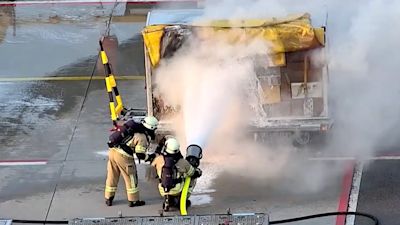
- Self-Igniting Parcel Investigations: A joint international investigation by UK, German, Lithuanian, Dutch, and Polish authorities under Eurojust exposed a plot involving self-igniting parcels sent across Europe, including an incident where a package caught fire at a DHL depot near Birmingham in 2024. Twenty-two suspects linked to Russian military-intelligence services have been identified
suspects
- Central
- birmingham
- Terrorism
- Friday 6 March 2026 at 6:06pm
An investigation into Russian-backed parcel bombs in the UK and Europe has identified 22 suspects.
A number of parcels exploded in the UK, Germany and Poland – one package caught fire at a DHL depot near Birmingham in 2024.
A 38-year-old Romanian man was arrested by counter-terrorism police over the Birmingham fire and remains under investigation.
He was apprehended after arriving on a flight to the UK at Stansted Airport.
British and European authorities now believe there was Russian involvement in the plot.
Four parcels were sent from Lithuania to addresses in the UK and Poland, European Union agency Eurojust said.
The consequences could have been far worse if the devices ignited during a flight, officials fear.
‘Nazi’ teenager who amassed weapons and discussed school ‘shoot up’ locked up

Man found guilty after filming himself planning to carry out terrorist attack
A parcel sent through a sorting centre in Germany caught fire at Leipzig airport, just before it was loaded on to an aircraft.
Investigators identified two test packages that had been sent to the United States and Canada, as well as two parcels in Amsterdam intended for the same destinations.
Authorities have identified 22 suspects in Lithuania and Poland likely to have been working on behalf Russian military intelligence services.
Two cases have now been sent to courts in Lithuania and Poland, with trials expected to happen later in the year.
The suspected perpetrators were recruited from Russia, Latvia, Estonia, Lithuania and Ukraine, and were often in a “vulnerable socio-economic situation”, Eurojust said.

They were recruited and given instructions through an online messaging service, with tasks divided among them and payments made in cryptocurrencies.
A UK government spokesperson said: “Russia’s ongoing hostile action puts our national security at risk, which is why this Government has taken concerted action to deter their hostility – increasing defence spending, expelling intelligence officers, sanctioning the GRU, targeting their illicit finance, and ensuring many of their proxies are brought to justice.
“National security is the first duty of government, and our law enforcement partners will continue to use the range of tools and powers available to them to keep the British public safe.”

Deputy Assistant Commissioner Vicki Evans of Counter Terrorism Policing, said: “The work of our European counterparts has been truly remarkable and demonstrates the critical need for us to work across borders, as well as the expertise of our colleagues overseas.
“The strength of cooperation in this case has led us to collectively identify what we believe to be Russian military intelligence involvement in a series of incidents across Europe.
“Our investigation is ongoing, and we continue to liaise closely with partners to ensure we’re doing all we can to keep the sector, and the public safe.
“We have been clear and open about the increasing levels of demand we’re seeing relating to the activity of foreign states here in the UK.
“For Counter Terrorism Policing this means more investigations, and our teams are working around the clock to identify and disrupt a range of activity to protect the UK and the public from terrorism and other national security threats.”